




DNA GTx

BRCA Somatic Alterations in Cancer: Advancing Precision Oncology

首页 > 博客 > BRCA Somatic Alterations in Cancer: Advancing Precision Oncology

Understanding BRCA somatic alterations in cancer

Cancer develops through the accumulation of genetic alterations that disrupt normal cellular regulation and genomic stability. Among the most clinically significant alterations are mutations affecting the BRCA1 and BRCA2 genes [1].

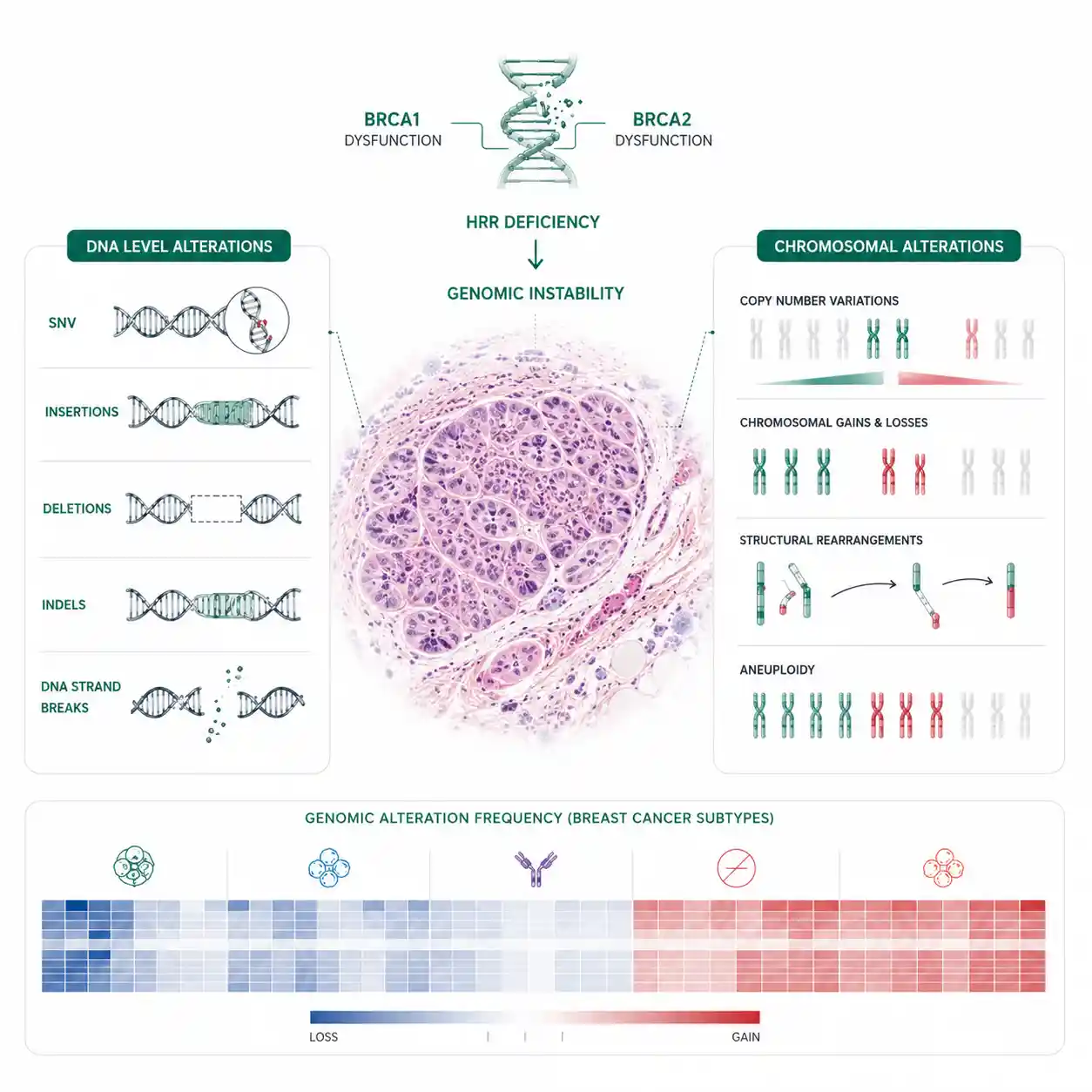
BRCA1 and BRCA2 are tumor suppressor genes that play a central role in repairing DNA double-strand breaks through the homologous recombination repair (HRR) pathway. When these genes become altered, the cell’s ability to accurately repair DNA damage is compromised, leading to genomic instability and cancer progression [2].

Unlike inherited (germline) BRCA variants, somatic BRCA alterations arise directly within tumor cells during a person’s lifetime and are not inherited or passed to family members. These alterations may occur in several cancer types, including:

  • 乳腺癌
  • 卵巢癌
  • 前列腺癌
  • 胰腺癌

The identification of somatic BRCA alterations has become increasingly important in modern oncology because these molecular changes may influence prognosis, therapeutic response, and eligibility for targeted treatment strategies [3].

What is somatic BRCA testing?

Somatic BRCA testing is a molecular analysis performed on tumor tissue or circulating tumor DNA (ctDNA) to identify acquired pathogenic or likely pathogenic alterations in the BRCA1 or BRCA2 genes.

Importantly, this test:

Somatic testing is fundamentally different from germline testing. While germline BRCA analysis evaluates inherited DNA from normal cells, somatic testing focuses on tumor-specific genomic changes acquired during cancer development.

Because some patients with somatic BRCA findings may also carry inherited BRCA variants, additional germline confirmation may be recommended when clinically appropriate.

The role of cfDNA liquid biopsy in somatic BRCA testing

Somatic BRCA alterations can also be detected through circulating cell-free DNA (cfDNA) liquid biopsy, a minimally invasive testing approach that analyzes tumor-derived DNA fragments circulating in the bloodstream.

Unlike conventional tissue biopsy, cfDNA testing can often be performed using a simple blood sample, providing an alternative when tumor tissue is limited or inaccessible.

Key advantages of cfDNA liquid biopsy include:

The integration of cfDNA analysis into somatic BRCA testing is expanding the role of precision oncology by enabling more accessible and dynamic molecular assessment of cancer.

Why somatic BRCA testing matters in precision oncology

The identification of somatic BRCA alterations provides clinically actionable information that can significantly influence cancer management and therapeutic planning.

Patients with BRCA-deficient tumors may benefit from personalized treatment approaches, including:

Targeted therapy selection

Tumors harboring BRCA alterations may demonstrate increased sensitivity to PARP inhibitors, which exploit deficiencies in homologous recombination repair to selectively target cancer cells [4].

Personalized treatment strategies

Somatic BRCA findings may help oncologists tailor treatment decisions based on the molecular profile of the tumor, supporting a more individualized approach to cancer care.

Expanded therapeutic opportunities

Identification of BRCA alterations may provide eligibility for specific targeted therapies or clinical trials investigating novel precision oncology approaches.

Improved molecular characterization

Comprehensive genomic profiling enables deeper understanding of tumor biology, helping clinicians better assess disease behavior and potential therapeutic vulnerabilities.

Together, these advances support the transition from conventional treatment models toward biomarker-driven precision oncology.

DNA GTx approach to somatic BRCA analysis

At DNA GTx, we provide comprehensive somatic genomic testing designed to identify clinically relevant alterations in BRCA1, BRCA2, and additional cancer-associated genes involved in homologous recombination repair and tumor progression.

Our testing solutions include both tissue-based molecular profiling and advanced cfDNA liquid biopsy approaches, enabling flexible and minimally invasive genomic assessment tailored to clinical needs.

Using robust next-generation sequencing (NGS) technologies and clinically validated variant interpretation frameworks, we aim to deliver accurate and clinically meaningful genomic insights that support:

At DNA GTx, we are committed to advancing precision medicine through innovative genomic testing solutions that translate complex tumor biology into actionable clinical insights.


📚 References

  1. Szentmártoni G, Mühl D, Csanda R, Szász AM, Herold Z, Dank M. Predictive value and therapeutic significance of somatic BRCA mutation in solid tumors. Biomedicines. 2024;12(3):593. doi:10.3390/biomedicines12030593.
  2. Pearson A, Proszek P, Pascual J, Fribbens C, Shamsher MK, Kingston B, et al. Inactivating NF1 mutations are enriched in advanced breast cancer and contribute to endocrine therapy resistance. Clin Cancer Res. 2020;26(3):608–622. doi: 10.1158/1078-0432.CCR-18-4044.
  3. Mateo J, Porta N, McGovern UB, et al. DNA-Repair Defects and Olaparib in Metastatic Prostate Cancer. New England Journal of Medicine. 2015;373:1697–1708. doi: 10.1056/NEJMoa1506859
  4. Faraoni I, Graziani G. Role of BRCA Mutations in Cancer Treatment with Poly(ADP-ribose) Polymerase (PARP) Inhibitors. Cancers (Basel). 2018;10(12):487. doi: 10.3390/cancers10120487

有问题吗?

有具体问题或需求吗?请填写下方表格,我们的团队将尽快与您联系。

error: Content is protected !!

博客