





Alterações Somáticas no Gene BRCA no Câncer: Avançando na Oncologia de Precisão
Página inicial > Blogs > Alterações Somáticas no Gene BRCA no Câncer: Avançando na Oncologia de Precisão

Compreendendo as alterações somáticas no gene BRCA no câncer
O câncer se desenvolve por meio do acúmulo de alterações genéticas que desregulam o controle celular normal e a estabilidade genômica. Entre as alterações clinicamente mais significativas estão as mutações que afetam os genes BRCA1 e BRCA2 [1].
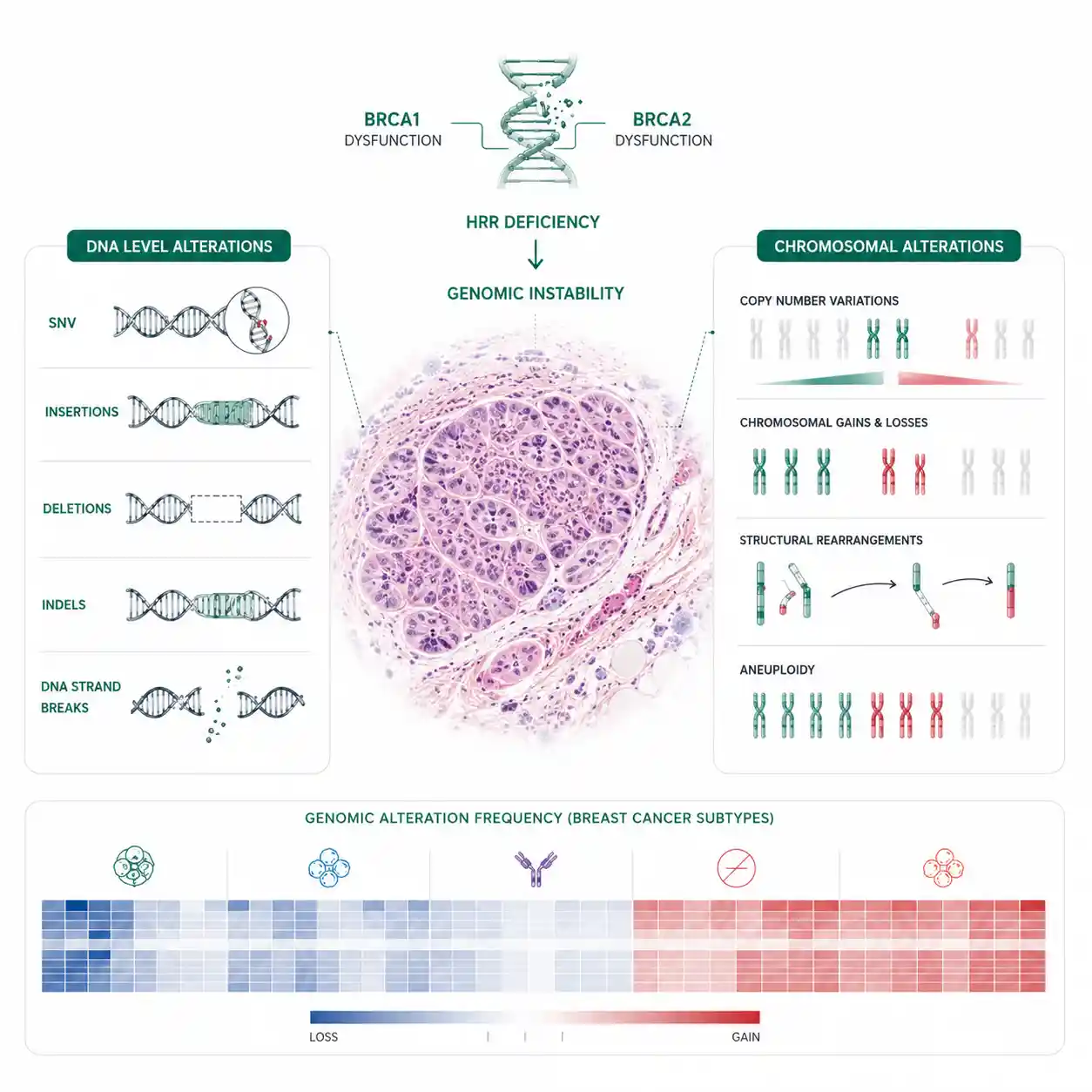
O BRCA1 e o BRCA2 são genes supressores de tumor que desempenham um papel central no reparo de quebras de fita dupla do DNA por meio da via de reparo por recombinação homóloga (HRR). Quando esses genes sofrem alterações, a capacidade da célula de reparar os danos no DNA de forma precisa é comprometida, levando à instabilidade genômica e à progressão do câncer [2].
Unlike inherited (germline) BRCA variants, somatic BRCA alterations arise directly within tumor cells during a person’s lifetime and are not inherited or passed to family members. These alterations may occur in several cancer types, including:
- Câncer de mama
- Câncer de ovário
- Câncer de próstata
- Câncer de pâncreas
A identificação de alterações somáticas no BRCA tornou-se cada vez mais importante na oncologia moderna, pois essas mudanças moleculares podem influenciar o prognóstico, a resposta terapêutica e a elegibilidade para estratégias de tratamento direcionado [3].
O que é o teste somático para BRCA?
O teste somático para BRCA é uma análise molecular realizada no tecido tumoral ou em DNA tumoral circulante (ctDNA) para identificar alterações patogênicas ou provavelmente patogênicas adquiridas nos genes BRCA1 ou BRCA2.
É importante ressaltar que este teste:
- Avalia alterações genéticas presentes especificamente dentro das células tumorais
- Não avalia o risco de câncer hereditário por si só
- Ajuda a identificar pacientes que podem se beneficiar de terapias-alvo
- Auxilia na seleção de tratamentos de precisão e a tomada de decisões clínicas
O teste somático é fundamentalmente diferente do teste germinativo. Enquanto a análise germinativa para BRCA avalia o DNA hereditário de células normais, o teste somático foca em alterações genômicas específicas do tumor, adquiridas durante o desenvolvimento do câncer.
Como alguns pacientes com achados somáticos no BRCA também podem carregar variantes hereditárias no BRCA, a confirmação germinativa adicional pode ser recomendada quando clinicamente apropriado.
O papel da biópsia líquida por cfDNA no teste somático do BRCA
As alterações somáticas no gene BRCA também podem ser detectadas por meio da biópsia líquida por DNA livre circulante (cfDNA), uma abordagem de teste minimamente invasiva que analisa fragmentos de DNA derivados do tumor que circulam na corrente sanguínea.
Diferente da biópsia tecidual convencional, o teste de cfDNA pode ser realizado a partir de uma simples amostra de sangue, oferecendo uma alternativa quando o tecido tumoral é limitado ou inacessível.
As principais vantagens da biópsia líquida por cfDNA incluem:
- Coleta de amostra minimamente invasiva
- Perfilamento molecular mais rápido
- Monitoramento em tempo real das alterações genômicas do tumor
- Suporte para a seleção de terapias de precisão
A integração da análise de cfDNA no teste somático do BRCA está expandindo o papel da oncologia de precisão ao permitir uma avaliação molecular mais acessível e dinâmica do câncer.
Por que o teste somático do gene BRCA é importante na oncologia de precisão
A identificação de alterações somáticas no BRCA fornece informações clinicamente acionáveis que podem influenciar significativamente o manejo do câncer e o planejamento terapêutico.
Pacientes com tumores deficientes em BRCA podem se beneficiar de abordagens de tratamento personalizadas, incluindo:
Seleção de terapia-alvo
Tumores que abrigam alterações no BRCA podem demonstrar maior sensibilidade aos inibidores de PARP, que exploram eficientemente as deficiências no reparo por recombinação homóloga para atingir seletivamente as células cancerígenas [4].
Estratégias de tratamento personalizadas
Os achados somáticos no BRCA podem ajudar os oncologistas a adaptar as decisões de tratamento com base no perfil molecular do tumor, promovendo uma abordagem mais individualizada ao cuidado do câncer.
Oportunidades terapêuticas expandidas
A identificação de alterações no BRCA pode fornecer elegibilidade para terapias-alvo específicas ou ensaios clínicos que investigam novas abordagens de oncologia de precisão.
Melhor caracterização molecular
Comprehensive genomic profiling enables deeper understanding of tumor biology, helping clinicians better assess disease behavior and potential therapeutic vulnerabilities.
Juntos, esses avanços auxiliam na transição dos modelos de tratamento convencionais para a oncologia de precisão guiada por biomarcadores.
Abordagem da DNA GTx para análise somática do gene BRCA.
Na DNA GTx, oferecemos testes genômicos somáticos abrangentes, projetados para identificar alterações clinicamente relevantes em BRCA1, BRCA2 e genes adicionais associados ao câncer envolvidos no reparo por recombinação homóloga e na progressão tumoral.
Nossas soluções de teste incluem tanto o perfilamento molecular baseado em tecido quanto abordagens avançadas de biópsia líquida por cfDNA, permitindo uma avaliação genômica flexível, minimamente invasiva e adaptada às necessidades clínicas.
Utilizando tecnologias robustas de sequenciamento de nova geração (NGS) e estruturas de interpretação de variantes clinicamente validadas, buscamos entregar informações genômicas precisas e clinicamente significativas que auxiliam em:
- Identificação de biomarcadores tumorais acionáveis
- Seleção de estratégias terapêuticas direcionadas
- Caracterização molecular de perfis tumorais
- Monitoramento genômico em tempo real por meio de aplicações de biópsia líquida
- Suporte para a tomada de decisões na oncologia de precisão
- Acesso ampliado a oportunidades de tratamento personalizado
Na DNA GTx, estamos comprometidos em avançar na medicina de precisão por meio de soluções inovadoras de testes genômicos que traduzem a biologia tumoral complexa em informações clínicas acionáveis.
📚Referências
- Szentmártoni G, Mühl D, Csanda R, Szász AM, Herold Z, Dank M. Predictive value and therapeutic significance of somatic BRCA mutation in solid tumors. Biomedicines. 2024;12(3):593. doi:10.3390/biomedicines12030593.
- Pearson A, Proszek P, Pascual J, Fribbens C, Shamsher MK, Kingston B, et al. Inactivating NF1 mutations are enriched in advanced breast cancer and contribute to endocrine therapy resistance. Clin Cancer Res. 2020;26(3):608–622. doi: 10.1158/1078-0432.CCR-18-4044.
- Mateo J, Porta N, McGovern UB, et al. DNA-Repair Defects and Olaparib in Metastatic Prostate Cancer. New England Journal of Medicine. 2015;373:1697–1708. doi: 10.1056/NEJMoa1506859
- Faraoni I, Graziani G. Role of BRCA Mutations in Cancer Treatment with Poly(ADP-ribose) Polymerase (PARP) Inhibitors. Cancers (Basel). 2018;10(12):487. doi: 10.3390/cancers10120487
Recent Blogs



Tem alguma dúvida?
Tem uma pergunta ou solicitação específica? Preencha o formulário abaixo e nossa equipe entrará em contato com você em breve.